No matter what happens, there is always something good around the corner, says Mick Foley, Director and Freelance Film Maker at One Minute Wonders. His local firm sources and creates Video Productions and Drone Services and are based in Bewdley, Worcestershire. Mick is a BBC Trained, CAA licensed Drone Pilot and Lecturer at Worcester…
By Ruby Edwards6 min read
No matter what happens, there is always something good around the corner, says Mick Foley, Director and Freelance Film Maker at One Minute Wonders. His local firm sources and creates Video Productions and Drone Services and are based in Bewdley, Worcestershire. Mick is a BBC Trained, CAA licensed Drone Pilot and Lecturer at Worcester University. More about his company can be found here.
Mick continues:
Your alarm goes off…
Usually with 2 espressos from the machine. If it’s Summer and I’m not filming I try to get up at 6 and go for a walk. We’re lucky that we live in Bewdley and there is a circular walk that takes you round by the church where we got married and down to the river. It’s about 40 minutes which is perfect. I then go out to my office in the garden which is called The Hyde as it overlooks the garden. I always try to read a couple of poems before I start the day and a chapter of a factual book. At the moment the poems come from Heaven on Earth:101 Happy Poems edited by Wendy Cope and the book is 31 Songs by Nick Hornby. I find that this reading puts me in good spirits to start the day.
Your typical day…
If we’re filming the car has to be loaded with camera equipment and this is usually prepped the day before the shoot. Batteries have to be charged for cameras. If we’re recording sound, we put new batteries in the radio mics before each shoot as there is nothing worse than a battery going down when recording an interview. Each shoot will be different so the kit will be different. Sometimes it’s just a camera and tripod but increasingly we are using two cameras for each shoot.
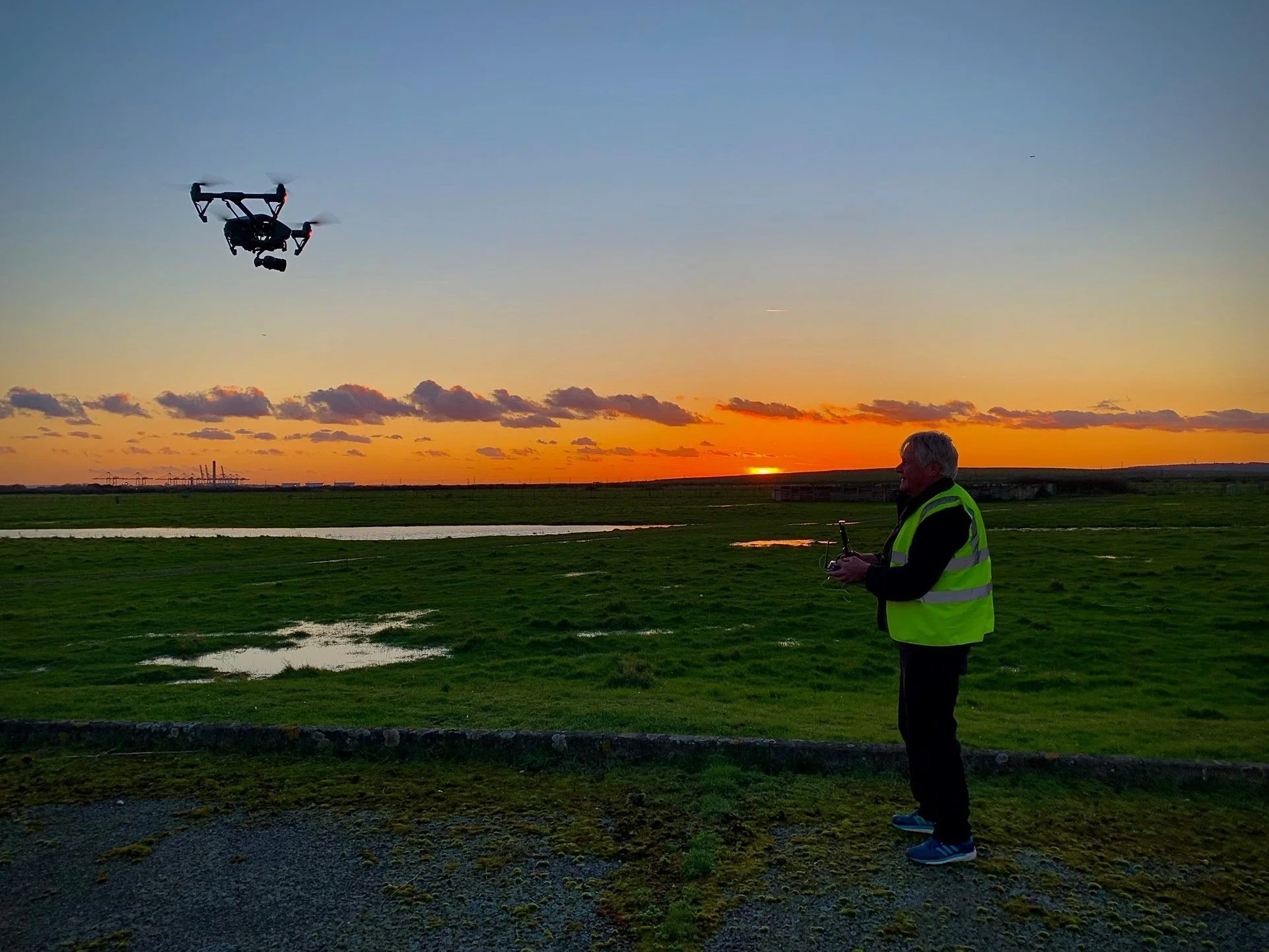
If we’re using the drone, again batteries have to be charged and this can take a whole day.
We also have to do a site survey before flying to make sure there are no special restrictions in the area or special notices from the CAA to prevent us flying and a risk assessment also has to be carried out.
Editing takes place in the Hyde and can go on until late in the evening or be started at the crack of dawn. That’s one of the advantages of working from home you can move time around to suit yourself.
You’re responsible for …
Making sure the videos we produce are the best they can be and that they help our clients sell or promote whatever message they are trying to get across
What worries you?
Sometimes it is difficult as our customers don’t understand the logistics of film making and how long it can sometimes take to film and edit a video. Editing is the hardest thing to make customers understand, the film is made in the edit and it’s organising the footage into a comprehensible narrative that takes the time.
What are your notable highlights to date?
Fourteen years ago my brother and best friend died unexpectedly and he left some money behind for me. I had written a short film script called ‘The Portwine Stain’. I decided to put some of the money he left me into making the film and dedicate it to him. It was accepted at loads of film festivals and won several awards.
Another highlight happened in my TV career. We made a series of documentaries for ITV called TALES OF THE UNACCEPTED. The six-part series was about people living apart from the communities surrounding them, reformed prostitutes who ran their own hotel, the notorious Mick Philpott who later went to prison for life after the house with his children burnt down and an alcoholic couple looking for somewhere to live. The series went on to win a Royal Television Society Award.
What’s the key to your success?
A bit of a cliché I know but don’t give up and work hard. Eventually you will get there.
Who or what has been your biggest influence?
I started my TV career as a clerk at the BBC in the Science Features Department in London. This was at the height of the troubles in Northern Ireland. Our department had a new series commissioned called Indelible Evidence that was ground breaking at the time. It was a drama/documentary about forensic science and used actors to play the parts of the main perpetrators and policemen. I was also captain of the five a side football team and in the team was a very talented director. As there were bombs going off and guns being fired in Northern Ireland, the location for one of the stories in the series, none of the normal runners were keen to go. The director asked me if I’d like to come along and join the crew. My job was to ferry cans of film to the airport and drive actors around (a runner) but it also gave me a great opportunity to see what happens on location when filming and watch this very talented director at close hand. He was from Northern Ireland himself but one of the things I particularly liked about him was that he wasn’t pretentious, he was normal. I went home and thought I’d really like to do this and so I transferred from the administrative side of things to production and worked my way up the ladder from runner to researcher to assistant producer to director and finally Producer/Director.
What’s on your to do list?
Today, I have to get two edits finished, send a couple of thank you emails, edit my son’s wedding video and prep the cameras for a shoot on Friday.
Biggest bugbear?
Don’t really have one.
What you wanted to be when you grew/grow up?
When I was growing up, I never wanted to work behind a desk, and I was also very keen on Natural History, my childhood was spent in Yorkshire and we always had an injured bird or animal in a cardboard box in the kitchen. I went to study Ecology at Aberystwyth University and wanted to be a conservation officer.
Where can you mostly be found after work?
Usually at my mum’s, she lives about three minutes away and is 97. I go down every night to make sure she is okay, get her something to eat and draw the blinds. After that it’s back home to eat with Cathy, my wife. On Friday night it’s usually a pint in our local The Pack Horse.
Best piece of advice you’ve received?
No matter what happens, there is always something good around the corner.
Your party piece?
Because we are of Irish descent when we have a gathering, say a wedding or a funeral, there is always a lot of singing or music being played. Because I can’t sing or play a musical instrument I have learnt a few poems off by heart that I can call on if needed. My favourite at the moment is ‘The Fiddler of Dooney’ by WB Yeats.
What’s next?
We have just won a big commission to film Worcestershire from the air which we are really excited about so that’s what we are about to start prepping.
How do people find out about you?
The best way is to have a look at our website www.oneminutewonders.co.uk or look at our LinkedIn page.
Read the article in County Lifestyle & Leisure Magazine here.